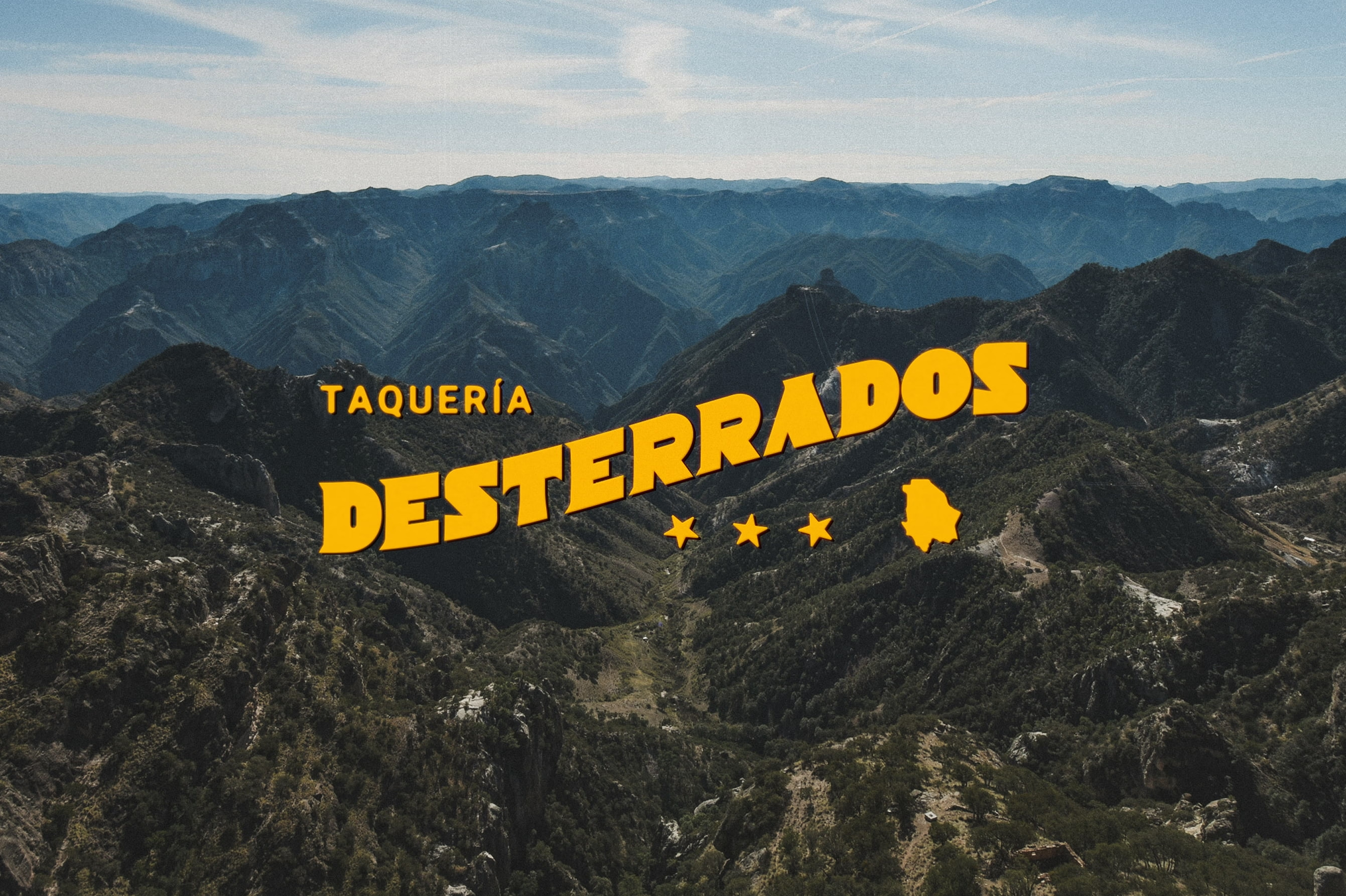
In branding, a well-thought-out name is a commercial advantage, even when its impact isn’t immediately obvious. While the visual language around a name (like color or typography) shapes how we perceive the final product, we must acknowledge the advantage that a structured narrative has towards building a cohesive identity.
Creating with a brand’s background, goals, and audience in mind allows us to evoke the right emotions and reactions. Background gives us something to stand on, goals provide direction, and the audience ensures we create authentic connections. In regards to naming, every process comes with its own challenges and compliance requirements. While demanding, it’s also one of the more rewarding parts of establishing a brand when approached with curiosity.
The Process
To further demonstrate what this process looks like, we’ll use the example of a taqueria in Chihuahua that came to us with a blank canvas. Originally from Mexico City, the founder’s background was familiar with a diverse taco culture and wanted to offer something unique inspired by Chihuahua’s gastronomy, with ingredients such as queso menonita (cheese produced by Mennonite communities), chile chilaca (a variety of Mexican chili pepper), and flour tortillas.
Before the naming process began, we had to understand the world we were entering. A deep dive into the competition and our audience revealed a defining truth: origin. While others leaned into specific dishes like birria or suadero, this focus on regionality highlighted an opportunity for us to carve out our own space. Chihuahua’s distinct culture and gastronomy provided that clear sense of what the restaurant could represent. With a strong contrast in both landscape and weather, resilience became a key aspect in creating something the people would feel represented by and that created permanence.
With the pieces in place, the inspiration was clear: the allure of a desert that tests and strengthens, and the drive to push forward in the face of uncertainty. It’s at this point that the actual naming process began with purpose. Through wordbanks, research, and brainstorming within the confines of an established world, it became easier to develop a name tied to the brand’s location and welcoming to its audience.
“Desterrados” delivered on all grounds.
Meaning “exiled” in Spanish, it conveyed the feeling of someone who was dug out of their original place, replanted somewhere else, and forced to start anew. Rebellious by nature, it also conveyed the idea of doing things on your own terms. It becomes memorable because it resonates with the audience, the concept, and is aligned with the overall strategy all at once.
Conclusion
A name captures personality by how it sounds, how it looks, and what it means. When we start with every bit of knowledge we have at our disposal, the results become memorable because they establish a connection with us that’s almost automatic.
Desterrados is proof of that.
Authors: Ángel Gómez, May Rubio, Ana Rosenzweig, Carolina Ortiz