When and Why Should It Evolve?
An identity that successfully worked for decades may eventually fail to meet modern demands, ranging from technical requirements of digital platforms, to the emotional connections today’s audiences expect. In these transitional processes, the answer lies in identifying the core values that define the brand so they can be communicated authentically and consistently. These values must remain as pillars, staying relevant even as we find new ways to express them. This involves reinterpreting graphic elements, refining their personality, or incorporating tangible experiences to communicate the brand’s promise with clarity.
Once the redesign’s need is identified, it’s important to remember that it doesn’t always mean starting from scratch. Usually, existing assets only require a better implementation or a clearer framework to create a flexible and cohesive system. The amount of intervention depends entirely on the brand’s current stage of life.
Reverence for History: La Mansion
La Mansión history is its most valuable asset. Since 1957, the restaurant has established itself as an iconic fixture in Mexican culinary culture, backed by premium ingredients and warm hospitality. To uncover the brand’s true personality, our first step was to experience it firsthand.
Our starting point was the recognition of an undeniable emotional bond. Within Espina Studio’s members, La Mansión’s very presence evoked childhood memories, proving how elements of the restaurant have become woven into this collective memory over the years. We were able to confirm during a visit to one of its franchises, that while the identity had remained unchanged for decades (originally designed by Signi in 1984), its essence remained intact through excellence in service and attention to detail.
We understood that the dining table is the brand’s defining territory: sharing meals is a timeless ritual that transcends generations. From this tangible and intangible heritage, we sought to honor the settings where our best stories have been told, keeping them alive so that new generations can write their own.
Balancing Modernity and Familiarity
Working with a historic brand requires finding the equilibrium between the “new” and the “familiar.” To achieve this, it’s necessary to identify its brand equity, elements that have created recognition and association through longevity. Furthermore, modernizing an identity requires a careful navigation of current trends: visual languages evolve rapidly, and adopting overused tropes can result in a loss of its uniqueness by attempting to blend in with competitors.
For La Mansión, this process meant reclaiming elements from its own history and translating them into a contemporary vocabulary. For its new wordmark, it pulls inspiration from one of its most memorable iterations, when the name appeared within a blue frame.
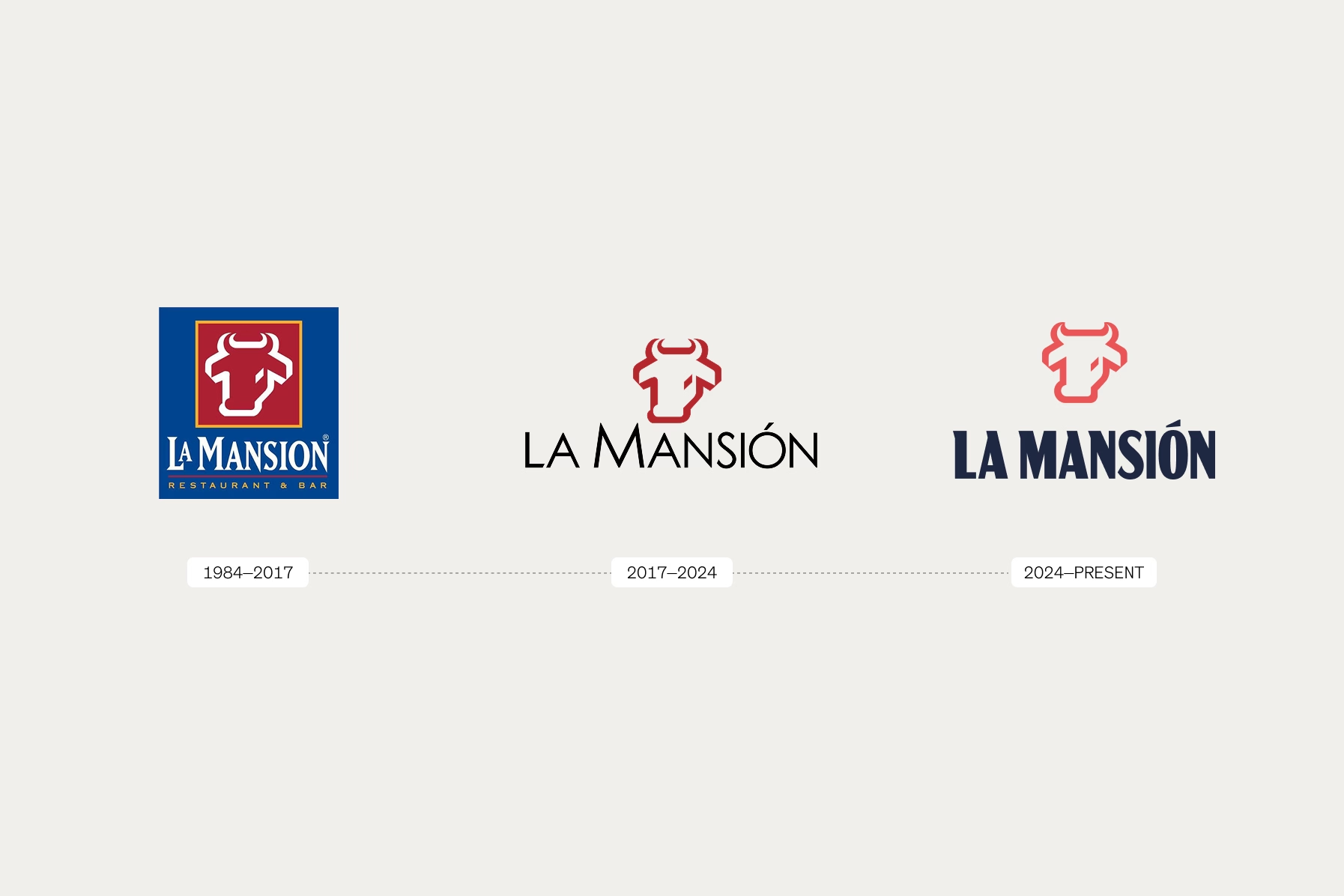
The icon also received subtle adjustments to ensure it functions across modern digital requirements. Every element of the identity required varying levels of change; evaluating its recognition, function, and historical ties allowed for more informed design decisions.
We also aimed to maintain the brand’s recognition through color. We reclaimed the iconic blue and red tones that defined their history, reinterpreting them into a deeper, more sophisticated palette with contemporary accents to provide versatility across the visual system.
This continuity is vital because an effective brand refresh produces a specific feeling: the brand feels fresh while remaining unmistakably recognizable.
Implementation: Bringing Evolution to New Contexts
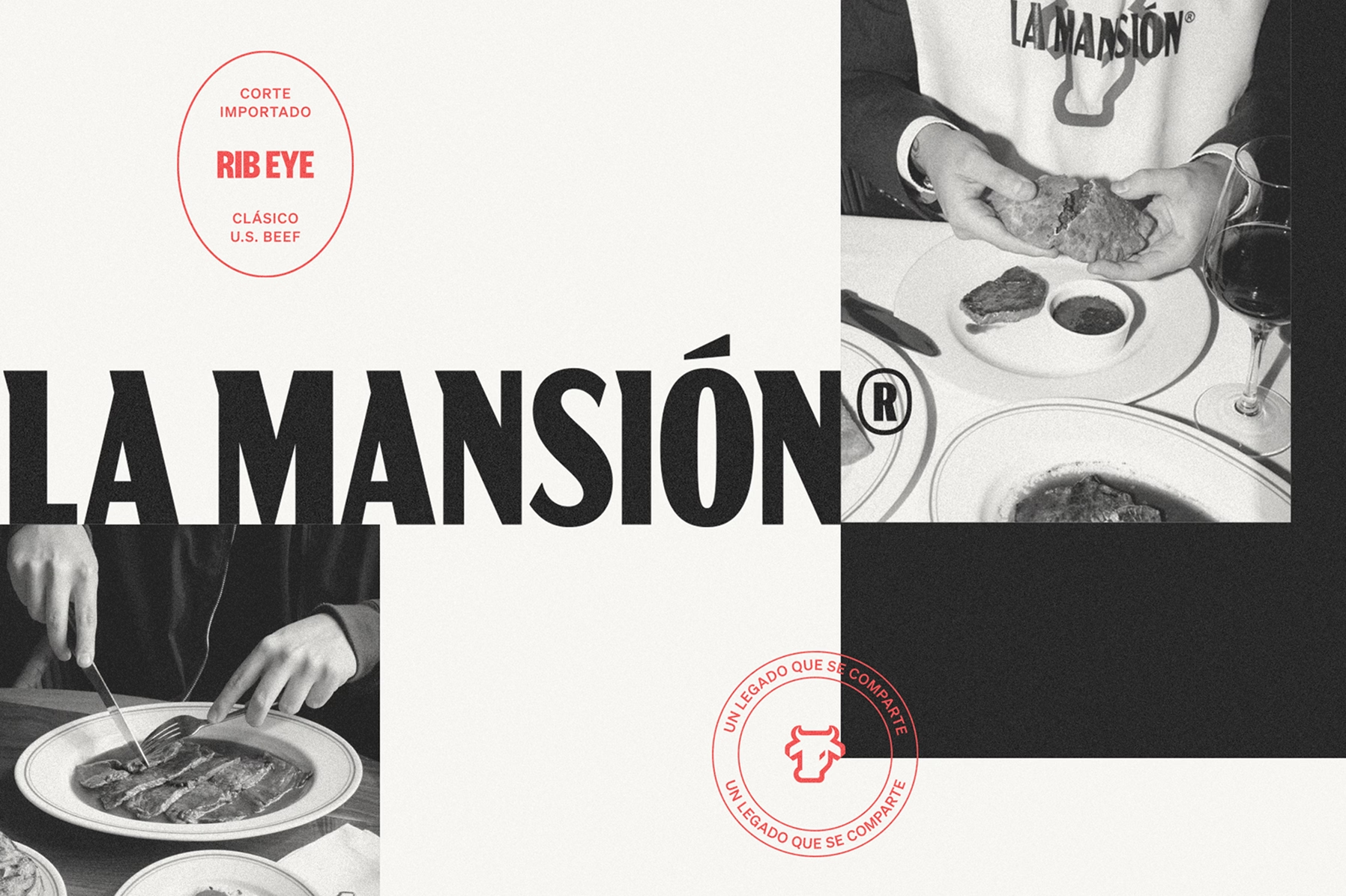
Many graphic systems were originally built for print media. Today, a single identity must perform seamlessly on everything from a smartphone screen to large-scale physical installations. The evolution of La Mansión addressed this diversity by creating a system capable of extending from the restaurant experience to its digital platforms. Photography became a fundamental tool in updating the brand’s perception; a more contemporary direction allowed us to transform how the space and products are perceived, clearly projecting our core narrative: the art of sharing the table.
The system is also designed for scalability. Stamps inspired by their “must-try” selection of dishes appear on both physical menus and digital content, extending to tableware and other souvenirs that enrich the guest’s experience. Furthermore, the typography was chosen to meet various communication needs while defining a major part of the brand’s personality. This being a condensed typeface to project the brand’s strength, complemented by a monospaced font for the menu to create a contemporary contrast.
The success of a brand’s evolution should not be measured solely by immediate sales or launch buzz. While those are important metrics, there are deeper questions: Did the brand become more relevant to its audience? Did it achieve better differentiation from competitors? Can its new language remain consistent over time?
Conclusion: Keeping the Story Meaningful
The case of La Mansión demonstrates how a traditional brand can modernize its language by leaning into the very codes that built its recognition. Its evolution takes existing elements and reorganizes them into a flexible system supported by the “Shared Legacy” strategy, positioning its history as a connection between generations.
A successful redesign recognizes accumulated value, establishes new relationships between assets, and projects the brand toward new horizons. The impact of this project resulted in tangible actions: from its new website that mirrored the physical experience to high-profile collaborations, such as the culinary partnership with Eno, a restaurant founded by Chef Enrique Olvera.
When working with a legacy brand, the central question must always be: How can we make a deep-rooted history continue to make sense today?
Authors: Ale Baragiotta, Angel Gómez, Carolina Ortiz, Diana Tolano, Osvaldo Vazquez